

 t. 0800 0359 880



Apply in minutes, get an instant decision and only pay when the job is done.
Enquire todayAs the colder months set in across Bedfordshire, most homeowners think about boilers, windows and draught-proofing doors. Very few think about the loft hatch, yet it’s often one of the weakest points in a home’s insulation.
Whether you live in a Victorian terrace in Bedford, a 1960s semi in Dunstable or a new-build in Leighton Buzzard or Biggleswade, an uninsulated loft hatch can quietly let warm air escape into the roof space. In this guide, we explain why that happens, how insulated loft hatches and ladders help, and how to tell if yours needs upgrading.
Warm air rises, and in most homes the loft hatch sits right above a landing or hallway where that warm air collects. If the hatch is a plain piece of board or ply, it offers very little resistance to heat passing through it.
The bigger problem is often the gaps. Many older hatches simply rest in their frame with no seal, so warm air leaks around the edges and into the cold loft above. You might have a well-insulated loft floor, but if the hatch is a weak spot, heat will find its way out through it.
That escaping air can also carry moisture into the loft. When warm, damp air meets cold timbers and roof surfaces, it can contribute to condensation, which over time may lead to damp or mould in the roof space.
An insulated loft hatch is designed to work as part of your home’s insulation rather than a gap in it. Compared with a basic hatch, it typically offers:
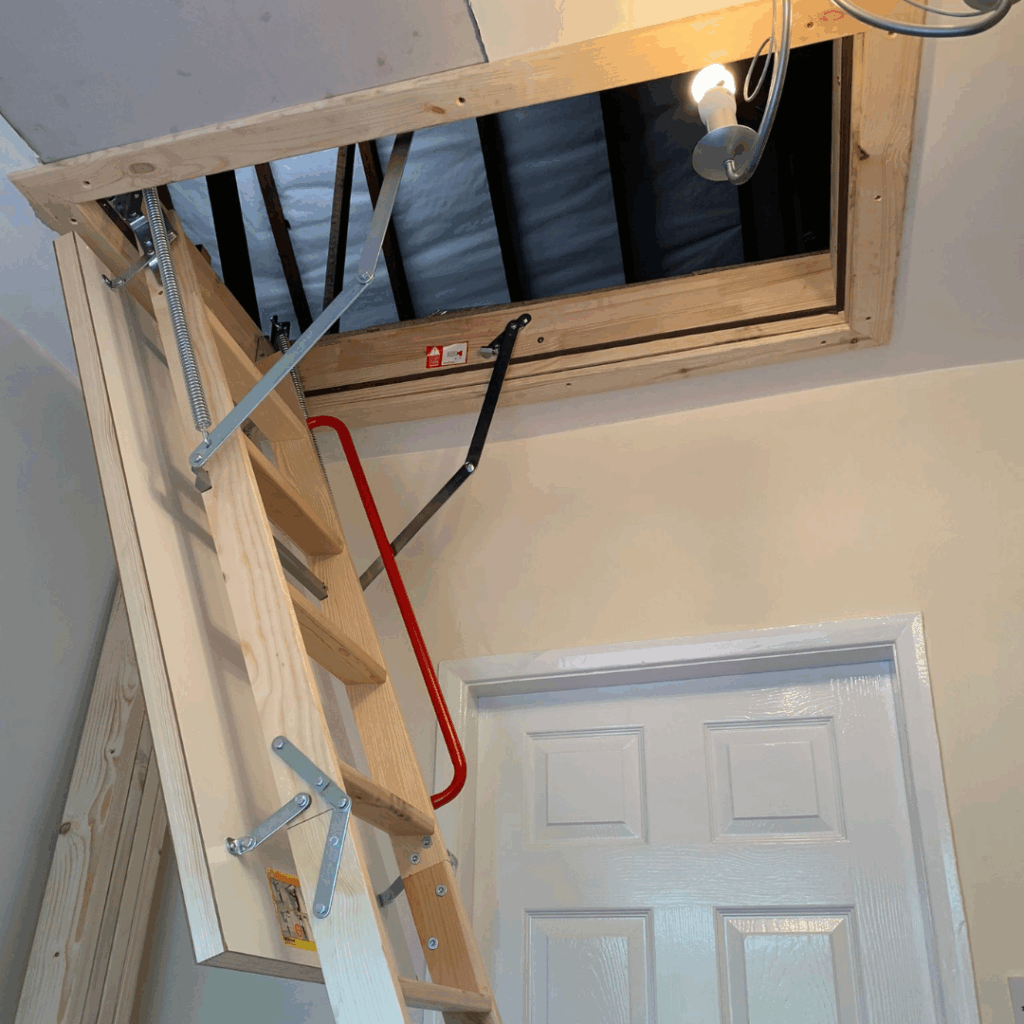
Many insulated hatches come as a complete unit with a fitted loft ladder. That means you get easier, safer access to the loft and better insulation in a single installation, without having to balance on a stepladder to push open a loose board.
Bedfordshire has a real mix of housing, and the loft hatch you’re likely to have depends a lot on when your home was built.
Older homes in Bedford and the market towns. Victorian and Edwardian houses in Bedford, and older properties in towns like Biggleswade and Leighton Buzzard, often have small, basic hatches that were never designed with insulation in mind. Many have been painted shut, patched up or left with no seal at all.
Mid-century homes around Dunstable. Homes from the 1950s to 1970s usually have a simple hatch panel in the landing ceiling. Even where the loft has since been insulated, the hatch is often left as it was.
New-builds across Central Bedfordshire. Newer estates in areas like Wixams, Houghton Regis and Biggleswade usually come with a hatch built to more recent standards. Even so, the basic hatches fitted as standard often aren’t designed for regular use, and many homeowners upgrade to an insulated hatch with a fitted ladder once they start using the loft for storage.
Not sure whether your hatch is letting heat escape? Look out for these signs:
If any of these sound familiar, an insulated loft hatch is a simple upgrade that can make your home more comfortable this winter.
Our Bedfordshire branch fits insulated loft hatches and ladders in homes across Bedford, Central Bedfordshire, Dunstable, Leighton Buzzard and Biggleswade. We’ll look at your existing hatch, recommend the right option for your home and handle the full installation.
Get in touch with our Bedfordshire branch today to arrange a free quote and keep more heat where it belongs this winter.

Talk to our Loft Ladder experts to find out your options.