

 t. 0800 0359 880



Apply in minutes, get an instant decision and only pay when the job is done.
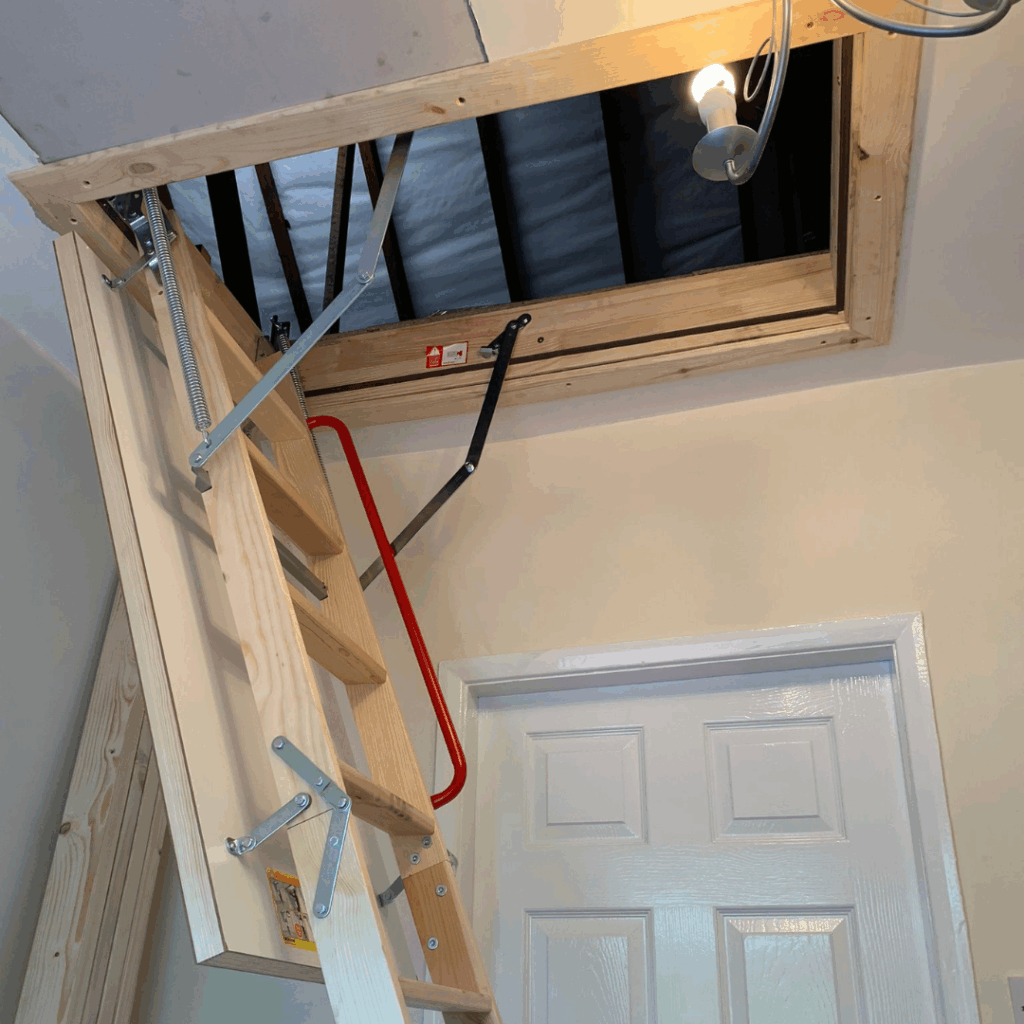
Enquire todayTo find the best structural position for a loft hatch in a UK home, look for a wide central hallway or landing, away from narrow walkways. Placing it here ensures safe ladder deployment and easy access while keeping the hatch away from main living areas.
The right position balances home safety, structural integrity, and daily practicality. A poorly placed opening can compromise ceiling joists or leave you balancing on a ladder over a staircase. Mapping out the structure of your home before committing saves costly headaches later.
For most British properties, the central landing or a wide hallway is the strongest choice. These spaces are designed for transition, which means a ladder extending downward won’t block a doorway or trap someone in a bedroom. The utilitarian appearance of a loft hatch also fits naturally in a hallway rather than interrupting the atmosphere of a living room or main bedroom.
It’s tempting to put the hatch above the stairwell to save space. This is a serious safety risk. Deploying a loft ladder across a flight of stairs creates an uneven, unstable base. Always ensure the floor beneath a loft hatch is completely flat and clear of obstructions.
Before installation begins, it’s important to understand what’s happening behind the plasterboard. Standard UK ceilings use joists — horizontal timber beams spaced at regular intervals. The loft hatch should run parallel to these joists where possible. If you need to cut a joist for a wider hatch, double-up timbers (called headers) distribute the load safely.
In homes built after the 1960s, modern trussed roofs form a strict W-shape. Cutting into these prefabricated trusses without structural engineering advice can threaten your roof’s stability. Always get professional advice before making any structural changes.
A good position on paper can fail if you haven’t checked both directions. Inside the loft, ensure there’s enough headroom to stand or move around once you’re through. Below the hatch, make sure the chosen ladder system has clearance to open fully without hitting a radiator or opposite wall.
Getting the loft hatch position right changes how you use your home. A well-placed, properly installed hatch provides safe, simple access for decades. Contact More Than Loft Ladders on 0800 0359 880 to discuss your installation.

Talk to our Loft Ladder experts to find out your options.